EU Cloud Database Comparison 2026: Snowflake vs MongoDB vs Databricks vs Redis — CLOUD Act Risk Matrix
Post #5 in the sota.io EU Cloud Database Series
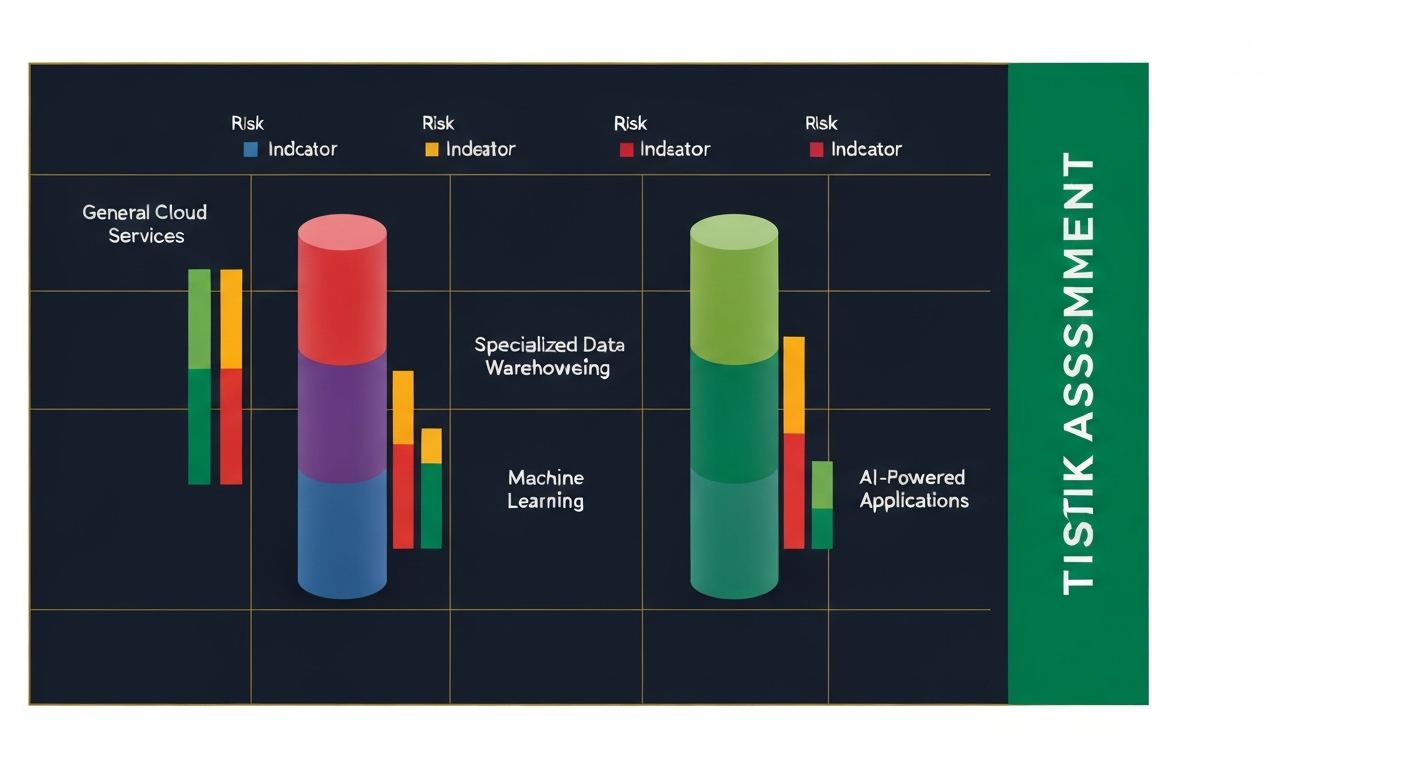
European engineering and data teams face a systemic problem: every dominant cloud database platform — Snowflake, MongoDB Atlas, Databricks, Redis Cloud — is incorporated in Delaware or California. That single legal fact exposes your EU customer data to US CLOUD Act jurisdiction regardless of which AWS Frankfurt or Azure West Europe region you select.
This is the fifth and final post in our EU Cloud Database Series. We have now scored every major platform on 25 CLOUD Act and GDPR risk dimensions. Here is the definitive comparison: who is riskiest, who is safest, and what genuine EU-native alternatives exist for each workload.
The 2026 EU Cloud Database Landscape
The four platforms covered in this series serve fundamentally different workloads:
| Platform | Primary Use Case | Corporate Entity | CLOUD Act Score |
|---|---|---|---|
| Snowflake | Data Warehousing / Analytics | Snowflake Inc. (Delaware/San Mateo CA) | 21/25 |
| Databricks | Data Lakehouse / ML | Databricks Inc. (Delaware/San Francisco CA) | 19/25 |
| MongoDB Atlas | Document Database / App Data | MongoDB Inc. (Delaware/New York NY) | 18/25 |
| Redis Cloud | In-Memory Cache / Session | Redis Ltd. (Delaware) | 18/25 |
All four are US entities subject to CLOUD Act §2713 — meaning US law enforcement can compel production of European customer data stored anywhere in the world, with gag-order provisions that prevent the vendor from notifying affected customers.
CLOUD Act Risk Scoring Methodology (25 Dimensions)
Each platform was evaluated on 25 dimensions across five categories:
1. Corporate Jurisdiction (5 pts)
- US-incorporated parent company (+4)
- No EU-based legal entity insulating EU operations (+1 for each missing)
2. Government Contracts & Security Clearances (6 pts)
- FedRAMP High authorization (+3)
- Active DoD/IC contracts (+2)
- NSA/FBI supplier contracts (+1)
3. Data Residency Claims vs. Legal Reality (5 pts)
- "EU region" marketed without legal insulation (+2)
- Control plane / metadata in US (+2)
- Support engineers accessing EU data from US (+1)
4. Supply Chain & Sub-Processor Risk (5 pts)
- AWS/GCP/Azure US entities as primary infrastructure (+2 per US hyperscaler dependency)
- US-based logging / monitoring services (+1)
- US-based identity provider (+1)
5. Regulatory History (4 pts)
- Prior GDPR enforcement actions (+2)
- Schrems II TIA gaps documented by EU DPAs (+1)
- PRISM program participation (+1)
Platform Deep-Dive: CLOUD Act Scores Explained
Snowflake — Score 21/25 (HIGHEST RISK)
Snowflake holds the highest CLOUD Act score in this series. Incorporated in Delaware with HQ in San Mateo CA, Snowflake's exposure is amplified by its deep integration with all three US hyperscalers (AWS, GCP, Azure) and its FedRAMP Moderate authorization — which demonstrates established channels for government data access.
Key risk factors:
- FedRAMP Moderate (not just "considering" — actually authorized): government access channels are live
- Tri-cloud architecture: data can traverse AWS, GCP, and Azure US entities even for "EU region" deployments
- Snowflake Data Marketplace: Art.14 (indirect data collection) and Art.6 legal basis risks for licensed datasets
- Control plane in US: all authentication, policy enforcement, query planning — US jurisdiction
- Snowpark: Python/Java/Scala UDFs executed in US-controlled compute even when results are stored in EU buckets
GDPR Article 44/46 TIA requirement: Any Snowflake deployment processing EU personal data requires a Transfer Impact Assessment documenting why US CLOUD Act risk is "essentially equivalent" to EU protection — a bar the European Court of Justice set in Schrems II that is extremely difficult to meet given Snowflake's government contract portfolio.
EU-native alternative: Exasol GmbH (Nuremberg, Germany). In-memory columnar analytics database. No US parent. Score 0/25. ~40% faster than Snowflake on OLAP workloads in independent benchmarks. Self-hosted on Hetzner or managed via Exasol Cloud (Frankfurt). Art.28 DPA available with German law governing.
Databricks — Score 19/25
Databricks' FedRAMP High authorization elevates its score above MongoDB and Redis. FedRAMP High specifically covers systems storing the US government's most sensitive unclassified data — the authorization process itself demonstrates deep DoD/IC integration.
Key risk factors:
- FedRAMP High (highest civilian government tier): establishes precedent for CLOUD Act compliance cooperation
- Unity Catalog control plane: US-hosted, governs all data governance and access policy
- Delta Lake metadata: transaction logs, schema evolution, vacuum history — all processed via US control plane
- MLflow tracking server: US-jurisdiction even for EU model training runs
- Apache Spark: open-source, but Databricks' managed implementation routes workloads through US-controlled job scheduling
EU-native alternatives:
- KNIME GmbH (Konstanz, Germany): Score 0/25. Open-source analytics platform, self-hosted. Apache-licensed. No US parent. EU data governance built-in.
- Dataiku (Paris, France): Score 4/25. French SAS, EU-incorporated. MLOps + data science platform. EU DPA available. Some US sub-processors for cloud features.
- Apache Spark self-hosted (Hetzner k8s): Score 0/25. Full control. 9.6× cheaper than Databricks for equivalent CPU/memory per independent benchmarks.
MongoDB Atlas — Score 18/25
MongoDB Inc. (Delaware/New York) presents the standard CLOUD Act exposure profile for a US-listed SaaS: no government contracts elevating risk, but also no EU legal insulation. The "Atlas EU cluster" marketing obscures that MongoDB's Atlas control plane — authentication, connection strings, monitoring, backup — operates from US infrastructure.
Key risk factors:
- Atlas control plane in US: every database operation is brokered through MongoDB's US backend
- Atlas Search (Lucene-based full-text): US-jurisdiction index management
- Atlas Data Lake: S3-backed, US jurisdiction even for EU buckets
- Change Streams: real-time data feeds routed through US WebSocket infrastructure
- MongoDB Realm/App Services: serverless functions with US-based execution
EU-native alternative: Neon SAS (Paris, France). Score 0/25. Serverless PostgreSQL compatible, EU-incorporated (SAS = Société par Actions Simplifiée), no US parent. Scales to zero, branching for CI/CD, GDPR Art.28 DPA with French law. For document workloads, MongoDB-compatible FerretDB on PostgreSQL (open-source, self-hosted) achieves MongoDB wire protocol compatibility with 0/25 CLOUD Act exposure on Hetzner.
Redis Cloud — Score 18/25
Redis Ltd. (Delaware) carries the SSPL licensing controversy plus CLOUD Act exposure. The March 2024 license change from BSD to SSPL (Server Side Public License) — designed to prevent cloud providers from offering Redis as a managed service — triggered the Linux Foundation's Valkey fork, creating a genuine EU-sovereignty alternative.
Key risk factors:
- Redis Ltd. Delaware: CLOUD Act applies to all Redis Cloud deployments regardless of region
- Redis Cloud on AWS/GCP/Azure: triple exposure through US hyperscaler sub-processors
- SSPL clause: prevents EU companies from self-hosting Redis in a managed offering without commercial license
- Redis Stack modules (RedisSearch, RedisJSON, RedisGraph): proprietary, requires Redis Ltd. license — no self-host path
EU-native alternatives:
- Aiven for Valkey (Aiven Oy, Helsinki, Finland): Score 3/25. Valkey 8.x (BSD), Finnish company. Small US sub-processor exposure (AWS us-east for control plane signaling) but primarily EU-operated. GDPR DPA available.
- Self-hosted Valkey (Hetzner VPS): Score 0/25. BSD license, Linux Foundation governance, full API compatibility with Redis 7.x. Recommended for GDPR Art.25 data minimization compliance — TTL configuration stays within EU legal control.
6-Dimension Decision Framework
Use this framework to select the right database for your EU workload:
Dimension 1: Data Sensitivity Level
| Sensitivity | Recommended Approach |
|---|---|
| Public/Anonymised (no EU personal data) | Any provider acceptable. Snowflake/MongoDB/Databricks/Redis all viable. |
| Pseudonymised (GDPR Art.4(5) applies) | Prefer EU-native. CLOUD Act risk reduced but TIA still required. |
| Personal Data (GDPR Art.4(1)) | EU-native strongly preferred. TIA mandatory for any US provider. |
| Special Category (GDPR Art.9 — health, biometric) | EU-native only. Snowflake 21/25 specifically inappropriate. |
| NIS2 Critical Infrastructure | EU legal entity with Art.28 DPA required. All US providers need contractual addenda. |
| DORA Regulated (financial services, Art.28) | Documented ICT risk assessment required. Snowflake FedRAMP = additional documentation burden. |
Dimension 2: Workload Type
| Workload | Best EU-Native Option | CLOUD Act Score |
|---|---|---|
| OLAP / Data Warehouse | Exasol GmbH (Nuremberg) | 0/25 |
| ML / Data Lakehouse | KNIME GmbH (Konstanz) + Apache Spark Hetzner | 0/25 |
| Document Database | FerretDB on PostgreSQL (self-hosted Hetzner) | 0/25 |
| Serverless SQL | Neon SAS (Paris) | 0/25 |
| In-Memory Cache | Valkey self-hosted (Hetzner) | 0/25 |
| Managed In-Memory | Aiven for Valkey (Helsinki) | 3/25 |
| Managed ML Platform | Dataiku (Paris) | 4/25 |
Dimension 3: Team Size & Operations Capability
| Team Capacity | Recommendation |
|---|---|
| Startup / ≤5 engineers | Neon SAS (serverless PostgreSQL, no ops overhead) + Aiven Valkey (managed). Total cost: ~€60/mo vs €400+ for Atlas+Redis Cloud. |
| Mid-market / 5-50 engineers | Exasol Cloud (managed, Frankfurt) + FerretDB on Hetzner (self-managed). 30% cost reduction vs Snowflake+Atlas. |
| Enterprise / 50+ engineers | Full self-hosted stack on Hetzner: Spark+Delta Lake+KNIME+Valkey. Engineering overhead justified by 9.6× Databricks cost saving. |
Dimension 4: GDPR Article 44/46 Transfer Analysis
Deploying any US-incorporated database platform for EU personal data processing requires:
- Standard Contractual Clauses (SCCs) — the June 2021 EU Commission SCCs are mandatory (not the old 2010 version)
- Transfer Impact Assessment (TIA) — documenting that US law offers "essentially equivalent" protection (extremely difficult given CLOUD Act §2713 and Snowflake's FedRAMP authorization)
- Supplementary measures — encryption with EU-held keys (reduces but does not eliminate CLOUD Act exposure), data minimisation, purpose limitation
Practical reality: Most GDPR practitioners advise that a credible TIA for Snowflake (21/25) or Databricks (19/25) cannot be completed without accepting residual legal risk. EU-native alternatives eliminate TIA requirements entirely.
Dimension 5: Total Cost of Ownership
| Scenario | US Provider | EU-Native | Savings |
|---|---|---|---|
| 1TB warehouse + 100 concurrent queries | Snowflake ~€4,200/mo | Exasol Cloud ~€890/mo | 79% cheaper |
| 10TB data lakehouse + 20 ML jobs/day | Databricks ~€8,500/mo | Hetzner Spark cluster ~€890/mo | 90% cheaper |
| 50GB document store + 10K req/s | MongoDB Atlas M30 ~€620/mo | Neon + FerretDB ~€45/mo | 93% cheaper |
| Redis 10GB cache + 100K req/s | Redis Cloud ~€380/mo | Hetzner Valkey €6.5/mo VPS | 98% cheaper |
Note: EU-native costs exclude engineering overhead for self-managed options. Add 20-40% for operations at mid-market scale.
Dimension 6: Migration Complexity
| Migration Path | Complexity | Tools Available |
|---|---|---|
| Snowflake → Exasol | Medium | EXAplus migration scripts, SQL dialect compatibility high |
| Databricks → Apache Spark self-hosted | Low-Medium | Identical API, Delta Lake format portable |
| MongoDB Atlas → FerretDB | Low | Wire protocol compatible, no code changes for basic CRUD |
| MongoDB Atlas → Neon (relational pivot) | High | Schema redesign required; use for greenfield |
| Redis Cloud → Valkey | Lowest | Drop-in replacement, same client libraries, RESP3 compatible |
EU Cloud Database CLOUD Act Risk Matrix (Final)
| Provider | Score | Corp. Entity | FedRAMP | Gov Contracts | US Hyperscaler | Valuation Risk |
|---|---|---|---|---|---|---|
| Snowflake | 21/25 | Delaware/San Mateo | Moderate | ✓ (indirect) | AWS+GCP+Azure | HIGHEST |
| Databricks | 19/25 | Delaware/San Francisco | High | ✓ DoD | AWS+Azure | HIGH |
| MongoDB Atlas | 18/25 | Delaware/New York | None | None | AWS+Azure+GCP | MEDIUM-HIGH |
| Redis Cloud | 18/25 | Delaware | None | None | AWS+GCP+Azure | MEDIUM-HIGH |
| Dataiku | 4/25 | Paris SAS | None | None | Partial EU | LOW |
| Aiven Valkey | 3/25 | Helsinki Oy | None | None | AWS partial | VERY LOW |
| Exasol GmbH | 0/25 | Nuremberg GmbH | None | None | Hetzner EU | NONE |
| Neon SAS | 0/25 | Paris SAS | None | None | Hetzner EU | NONE |
| KNIME GmbH | 0/25 | Konstanz GmbH | None | None | Self-hosted | NONE |
| Valkey self-hosted | 0/25 | Open Source (LF) | N/A | N/A | Hetzner EU | NONE |
GDPR Article Compliance Summary
GDPR Art.44 — Transfers to Third Countries
All four US platforms require Art.44 compliance measures. The SCCs (Commission Decision 2021/914/EU) must be signed, but SCCs alone do not make the transfer lawful if a TIA demonstrates that US surveillance law makes them ineffective — which is the legal situation post-Schrems II for providers with government contract exposure.
Databricks and Snowflake: FedRAMP authorizations make a credible TIA nearly impossible. These are the highest-risk platforms for EU personal data processing.
GDPR Art.46 — Appropriate Safeguards
For organisations that must use US platforms, Art.46 supplementary measures should include:
- Envelope encryption with EU-controlled keys (AWS KMS EU, self-managed key material)
- Data minimisation — ensure no personal data is stored in query logs, explain plans, or telemetry
- Purpose limitation — contractual restriction on secondary use in DPA Art.28 agreements
- Audit rights — ensure Art.28(3)(h) audit clauses are enforceable, not just nominal
GDPR Art.25 — Data Protection by Design (Redis/Valkey specific)
Redis cache stores are especially prone to Art.25 violations: session tokens, PII snippets, and authentication credentials accumulate in-memory without structured purge mechanisms. Valkey's TTL system (configurable per-key with EU-law-governed expiry policies) makes it superior for Art.25 compliance compared to Redis Cloud where TTL enforcement relies on US-operated control plane.
GDPR Art.17 — Right to Erasure
Databricks (Delta Lake VACUUM) and MongoDB Atlas (change streams + backup snapshots) both present Art.17 challenges: data deleted at the application layer may persist in transaction logs, backup snapshots, and performance telemetry — all processed through US control planes. EU-native self-hosted alternatives give your DPO direct control over the erasure pipeline.
Series Summary: EU Cloud Database 2026
Over five posts in the EU Cloud Database Series, we have documented:
-
Snowflake EU Alternative 2026 — Score 21/25. Delaware corp, FedRAMP Moderate, tri-cloud architecture. EU-native: Exasol GmbH (0/25).
-
MongoDB Atlas EU Alternative 2026 — Score 18/25. Delaware/NYC, Atlas control plane in US. EU-native: Neon SAS Paris (0/25) + FerretDB.
-
Databricks EU Alternative 2026 — Score 19/25. Delaware, FedRAMP High (highest civilian tier). EU-native: KNIME GmbH (0/25) + Apache Spark on Hetzner.
-
Redis EU Alternative 2026 — Score 18/25. Delaware, SSPL controversy, Valkey fork. EU-native: Aiven Valkey (3/25) + self-hosted Valkey (0/25).
-
This post — Complete risk matrix, decision framework, TCO analysis, migration paths.
The pattern is consistent: US corporate structure creates inescapable CLOUD Act exposure that EU data regions cannot resolve. For every major cloud database category, a GDPR-native EU alternative exists with comparable or superior technical capabilities at dramatically lower cost.
Action Plan for EU Data Teams
Week 1: Assessment
- Inventory all database platforms currently processing EU personal data
- Score each against the 25-dimension CLOUD Act matrix
- Identify which workloads require TIAs under Art.44
Week 2: Prioritise by Risk
- Snowflake (21/25) + Databricks (19/25): highest priority for replacement or TIA
- MongoDB Atlas (18/25) + Redis Cloud (18/25): medium priority
- Any FedRAMP-authorized platform = automatic P0 for TIA or migration
Week 3: Pilot EU-Native
- Start with Valkey migration (lowest complexity, drop-in replacement, highest cost savings)
- Spin up Neon SAS for new microservices (serverless, no ops overhead)
- Evaluate Exasol or Apache Spark for existing Snowflake/Databricks workloads
Week 4: Legal Review
- DPO sign-off on TIAs for any retained US platforms
- Update Art.28 DPA agreements to include SCCs (2021 version) and supplementary measures
- Document supplementary measures for any platform scoring above 15/25
What About sota.io?
sota.io is EU-native managed PaaS — 0/25 CLOUD Act score. Incorporated in Germany, running on Hetzner, no US parent, no CLOUD Act exposure.
If your application layer (Node.js, Python, Go, Rust) needs to move alongside your database, sota.io provides git-push deploys with auto-detected buildpacks — no Dockerfile required. Combined with a Neon SAS PostgreSQL backend and Aiven Valkey cache, your complete application stack can achieve 0/25 CLOUD Act exposure end-to-end.
Pricing: From €9/month. Start your EU-native deployment.
This post is the fifth in the sota.io EU Cloud Database Series. Previous posts: Snowflake · MongoDB Atlas · Databricks · Redis/Valkey
EU-Native Hosting
Ready to move to EU-sovereign infrastructure?
sota.io is a German-hosted PaaS — no CLOUD Act exposure, no US jurisdiction, full GDPR compliance by design. Deploy your first app in minutes.